
The well system
A private supply has no utility upstream and no report to read. The system gets sized on what is actually coming out of your ground, and that changes house to house.
Dealing with Taste or smell · Scale on everything · Staining · A well · Nothing you can taste
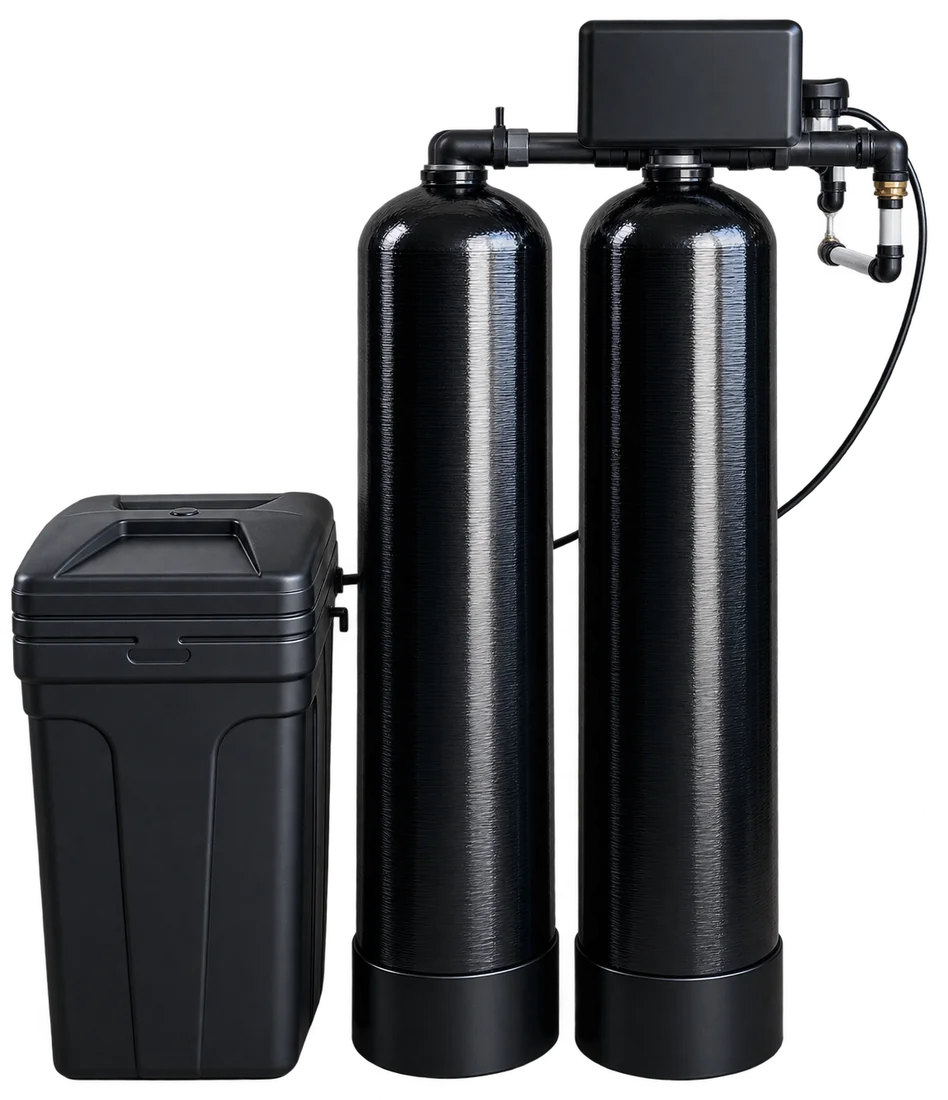
A dual tank well setup. Yours is configured after the consultation.
Some of what it takes care of
Orange staining in sinks, tubs and laundry
The rotten egg smell that hits the hot water first
Grit and sediment in aerators and screens
And when the consultation finds something in your supply these stages do not cover, you get pointed at what does.
The system
There is no one well system, because there is no one well. Iron, sulfur, sediment and hardness turn up in different mixes, so the stages get picked after the consultation, not before. Every setup shares two things: it sits where the line enters the house, and it is sized on your supply.
Drinking water
The kitchen sink still gets its own reverse osmosis stage, and the consultation folds it into your setup.
The number
Sized and priced on its own
Well setups do not share the city water number, because the stages depend on the supply. You get yours the same way, in writing, after a call about what your water is showing you.
Get Your Free Water ConsultationNobody upstream is treating a well but you.
Rain, drought, and the seasons move the water table, and that changes what ends up in your water. A well that runs clear in October can stain fixtures in April, and heavy rain can wash bacteria in. So we size the system for your well's worst months, not one good test.
The number of tanks depends on your water and your needs. Each tank has a specific function, and during the consultation, we discuss the lineup.
No, we can help you with water testing if it hasn't been tested yet. The North Carolina Division of Public Health recommends that owners test their wells routinely.
The consultation is free. Leave a name and a number, or just call.